
Completing Class 12 is an important milestone, and many students begin exploring career paths that combine practical learning with long-term employment opportunities. For those who enjoy interacting with people, working in dynamic environments, and building service-oriented careers, a diploma in hotel management after 12th can be an excellent option.
The hospitality industry extends far beyond hotels. It includes resorts, restaurants, cruise lines, airlines, event management companies, corporate hospitality, tourism businesses, and luxury service organizations. A well-designed diploma prepares students with the technical knowledge and interpersonal skills required to succeed in these diverse sectors.
One of the biggest advantages of pursuing a diploma is the emphasis on practical education. Students spend time learning through kitchens, front office simulations, housekeeping labs, food and beverage service training, and industry exposure rather than relying only on classroom lectures.
A quality hotel management curriculum generally includes subjects such as:
- Front office operations
- Food production
- Food and beverage service
- Housekeeping management
- Hospitality communication
- Customer service
- Hotel accounting basics
- Event coordination
- Hospitality marketing
- Professional etiquette
When comparing institutes, students should focus on more than course fees or duration. Infrastructure, faculty experience, practical laboratories, internships, placement support, and industry partnerships all influence the quality of education.
Internships are particularly valuable because they allow students to experience real hospitality operations before graduating. Working alongside experienced professionals helps learners understand workplace expectations, improve communication skills, and develop confidence.
Another important consideration is personality development. Hospitality professionals interact with guests every day, making communication, teamwork, grooming, time management, and problem-solving just as important as technical knowledge.
Pune has become a thriving destination for hospitality education due to its growing tourism sector, business travel, educational institutions, and expanding hotel industry. Students studying in Maharashtra can benefit from exposure to both national and international hospitality standards while remaining close to a wide range of employment opportunities.
Parents often appreciate diploma programs because they enable students to develop employable skills within a structured learning environment. Graduates can begin working immediately or continue higher education to expand their career prospects.
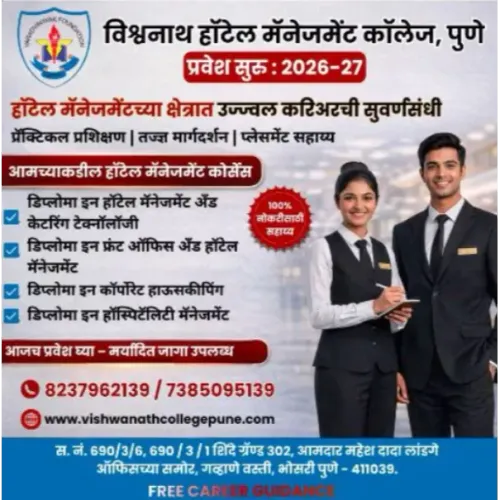
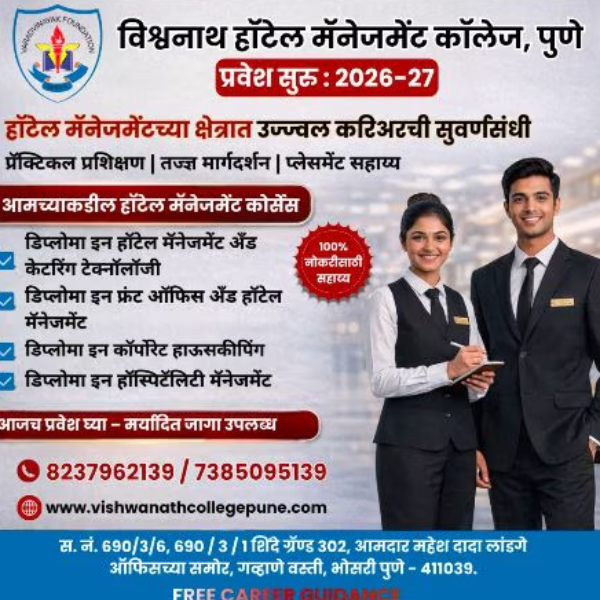
Institutions such as Vishwanath College offer vocational education designed to combine classroom learning with practical training. Exposure to real hospitality scenarios helps students understand industry expectations before entering professional roles.
Choosing a diploma in hotel management after 12th is ultimately about selecting an institute that supports both technical excellence and personal growth. Students who receive balanced education, practical exposure, and professional guidance are better prepared to build successful careers in India's expanding hospitality industry.
Hospitality rewards individuals who enjoy learning, adapting, and serving others with professionalism. With the right training, students can enter a field that continues to offer diverse opportunities across India and internationally.