


As industries continue to prioritize workplace safety, the demand for qualified fire and safety professionals has grown steadily. Students completing school often explore fire engineering courses after 12th as a pathway toward careers that combine technical knowledge with public safety responsibilities.
Fire engineering involves much more than responding to emergencies. Professionals in this field help prevent incidents through planning, inspection, risk assessment, fire protection system design, emergency preparedness, and safety compliance.
A structured course introduces students to both theoretical principles and practical applications. Classroom instruction is reinforced through equipment demonstrations, fire drills, rescue exercises, and emergency response simulations.
Students commonly study topics including:
- Fire prevention techniques
- Fire detection systems
- Fire suppression equipment
- Building safety standards
- Industrial safety practices
- Disaster management
- Rescue operations
- Hazard identification
- Emergency planning
- Occupational safety regulations
Practical training remains one of the strongest features of fire engineering education. Students learn how to inspect equipment, evaluate workplace risks, use firefighting tools safely, and respond effectively during emergencies.
Graduates can pursue careers across multiple industries, including manufacturing, oil and gas, construction, healthcare, airports, commercial buildings, logistics, educational institutions, hospitality, and infrastructure development. Safety professionals are also employed by consulting firms and government organizations responsible for regulatory compliance.
Pune continues to grow as an industrial, educational, and commercial centre within Maharashtra. The expansion of manufacturing facilities, residential developments, corporate offices, and infrastructure projects has increased the need for trained professionals who understand modern fire safety standards.
Students selecting a fire engineering course should evaluate practical facilities, faculty expertise, industry exposure, placement support, and curriculum relevance. Training that reflects current industry practices helps graduates transition more successfully into professional roles.
Career growth does not stop after completing the initial qualification. Many professionals continue developing expertise through advanced certifications, workplace experience, and specialized safety programs covering industrial hazards, environmental safety, and occupational health.
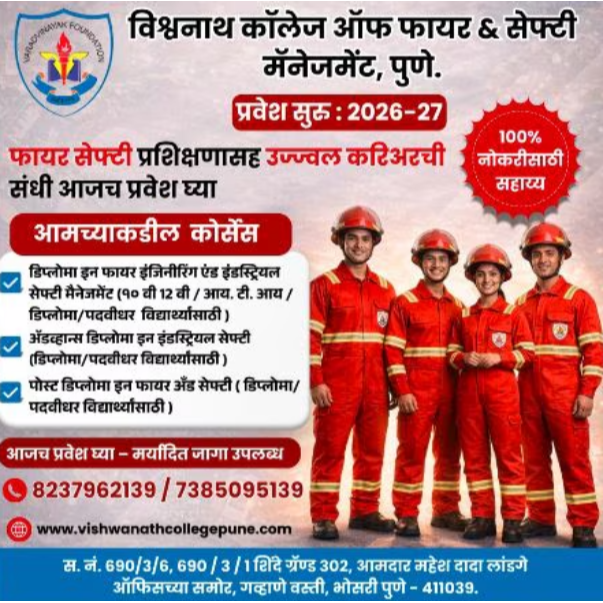
Institutions such as Vishwanath College contribute to vocational education by combining practical instruction with industry-focused learning. Exposure to realistic emergency scenarios helps students understand the responsibilities associated with protecting people, property, and industrial operations.
Fire engineering is ultimately about prevention, preparation, and responsible decision-making. Students who are interested in technical work, leadership, and public safety may find this field both professionally rewarding and socially meaningful.
With industries placing increasing importance on workplace safety and regulatory compliance, trained fire engineering professionals will continue to play an essential role across India's expanding industrial landscape.