


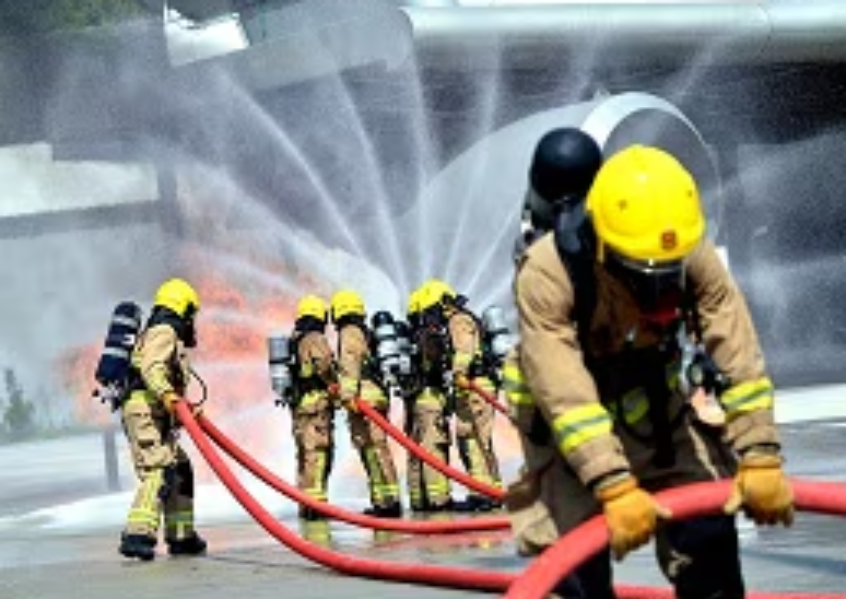
Fire Prevention and Firefighting Techniques are essential components of industrial and workplace safety. Fires can threaten people, equipment, buildings and business operations, which is why prevention and emergency preparedness need to be understood before an incident occurs.
For students in Pune considering industrial safety education, fire safety training should provide more than instructions on how to operate an extinguisher. It should explain why fires occur, how risks can be reduced and how people should respond during emergencies.
Fire Prevention Comes First
The safest fire is one that never starts.
Fire prevention involves identifying possible ignition sources, combustible materials and unsafe conditions before they combine to create an emergency.
Examples of preventive practices may include
- Maintaining electrical installations appropriately
- Controlling ignition sources
- Storing materials safely
- Maintaining good housekeeping
- Keeping exits accessible
- Following safe work procedures
- Inspecting relevant equipment
- Reporting hazardous conditions
Different workplaces require different preventive measures based on their activities and materials.
Understand How Fire Develops
Students should understand the basic conditions required for combustion.
This knowledge helps explain why different control methods work.
Rather than memorising isolated firefighting instructions, learners should understand how removing or controlling essential elements of combustion can influence a fire.
This provides a stronger conceptual foundation for later safety training.
Different Fires Require Appropriate Responses
Not every fire should be approached in the same way.
The materials involved can influence which extinguishing method is appropriate. Using unsuitable firefighting media can create additional danger in some situations.
Training should therefore explain fire classifications, appropriate extinguisher selection and the limitations of first-response firefighting.
Students must also understand that personal safety and evacuation take priority. Not every fire should be fought by an untrained person.
Extinguisher Training Should Be Practical
Watching someone operate a fire extinguisher is not equivalent to developing practical understanding.
Where suitable facilities and safety arrangements exist, supervised demonstrations can help students understand extinguisher components, positioning and operating principles.
Training should also address inspection awareness, accessibility and the importance of selecting equipment suitable for the hazard.
Emergency Evacuation Is Part of Fire Safety
Fire Prevention and Firefighting Techniques should include emergency response planning.
Workers need to know what to do when an alarm is raised.
Important concepts include
- Recognising emergency alarms
- Using designated evacuation routes
- Keeping exits clear
- Proceeding to assembly areas
- Avoiding unsafe re-entry
- Following instructions from responsible personnel
- Reporting relevant information during emergencies
Emergency procedures should be understood before an incident, not discovered during one.
Industrial Environments Need Risk-Specific Planning
Pune and surrounding industrial regions in Maharashtra include factories, engineering facilities, warehouses, automotive operations and construction sites.
Fire hazards differ across these environments.
A warehouse storing combustible materials may require different controls from an engineering workshop performing hot work. Electrical installations, fuels, chemicals and industrial processes can introduce additional considerations.
Students therefore need to learn how fire-safety principles are applied according to the actual workplace risk.
How to Evaluate a Fire Safety Programme
Before joining a safety course, students should determine whether the training develops both knowledge and practical awareness.
Useful questions include
- Does the syllabus cover fire prevention?
- Are fire classifications explained?
- Is extinguisher selection discussed?
- Are emergency procedures included?
- Does the programme cover workplace hazard identification?
- Are practical demonstrations available?
- Is industrial risk assessment taught?
- How are practical competencies evaluated?
A programme that covers prevention, response and risk assessment gives students a more complete understanding than one focused only on firefighting equipment.
Vishwanath College in Pune offers career-oriented education in vocational and skill-based areas, including subjects relevant to industrial safety. Prospective students can review current course content and practical-training arrangements before admission.
Effective Fire Prevention and Firefighting Techniques begin with understanding risk. Extinguishers and emergency procedures remain important, but preventing unsafe conditions is equally significant.
For students preparing for safety-related responsibilities, learning to identify fire hazards, understand appropriate controls and respond responsibly during emergencies provides a practical foundation for safer workplaces.