


Fashion may appear highly creative from the outside, but producing a well-made garment requires technical knowledge, measurement accuracy, fabric understanding, construction skills, and careful planning. Fashion and clothing technology brings these creative and technical elements together.
For students considering fashion education in Pune, understanding the complete garment-development process can help clarify what they are likely to learn.
Fashion Begins Before Stitching
A garment does not begin at the sewing machine.
The process may start with an idea, reference, requirement, sketch, or design concept. That idea then has to be translated into something that can actually be constructed and worn.
Students may therefore need to understand:
- Design fundamentals
- Measurements
- Fabric characteristics
- Pattern development
- Cutting
- Garment construction
- Finishing
- Fit evaluation
Each stage influences the final result.
Why Fabric Knowledge Is Important
Different fabrics behave differently.
Some materials stretch. Others drape softly or hold a structured shape. Thickness, texture, fibre composition, shrinkage, and grain can influence how a garment should be designed and constructed.
Choosing fabric only by colour or appearance can create difficulties later.
A clothing technology student should gradually learn how material selection affects pattern preparation, stitching, finishing, comfort, and garment performance.
Pattern Making Turns Ideas into Shapes
Patterns provide the pieces from which garments are cut.
Pattern development requires measurements, calculations, understanding of garment structure, and precision.
A small error in a pattern can influence the fit of the finished garment.
Students interested in fashion therefore benefit from treating pattern making as a technical skill rather than simply an intermediate step before stitching.
Garment Construction Develops Through Practice
Sewing skill improves through repeated practical work.
Students need to become familiar with machine operation, seams, hems, closures, finishing methods, and construction sequences.
The aim is not merely to complete a garment. Good construction should produce an item that is functional, appropriately finished, and consistent with the intended design.
This is why practical training is particularly important in fashion-related education.
Fit Is Part of Technical Quality
A garment can look attractive on a sketch but still perform poorly if the fit is incorrect.
Fit depends on measurements, pattern accuracy, garment ease, fabric behaviour, and construction.
Students may learn to identify fitting problems and make appropriate adjustments.
Developing this skill requires observation and repeated practice rather than memorising a single set of measurements.
Where Can These Skills Lead?
Fashion and clothing skills can support several career directions depending on training, experience, portfolio quality, and further education.
Possible areas include:
- Garment construction
- Pattern development
- Boutique work
- Tailoring
- Sampling
- Fashion production support
- Alteration services
- Apparel entrepreneurship
Some students may eventually choose independent work, while others may seek opportunities within established apparel businesses.
Fashion Education in Pune
Pune has a diverse student population and a broad market for apparel, tailoring, boutiques, retail fashion, customised garments, and related services.
Students from Pune and other parts of Maharashtra who want vocational fashion education should look beyond course names.
The learning environment should ideally allow students to practise rather than only study garment construction theoretically.
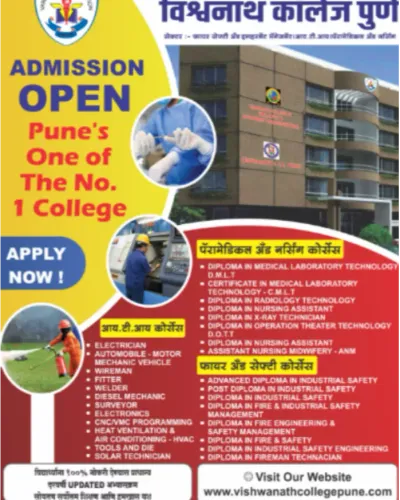
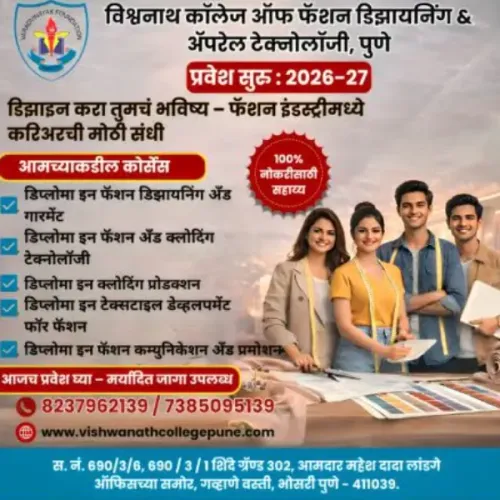
Vishwanath College offers career-oriented education in Pune for learners exploring practical vocational pathways. Students interested in clothing technology should review the current syllabus, training facilities, practical assignments, and course requirements.
What Makes a Fashion Course Useful?
A student should be able to answer several questions before enrolling.
How much time is dedicated to practical work? Does the curriculum include pattern making? Are students taught garment construction systematically? Do assignments help build a portfolio? Are different fabrics and construction methods introduced?
The answers provide more useful information than a course title alone.
Students should also consider their own interests. Someone who enjoys drawing but dislikes measurement and construction may have different expectations from someone who wants to become technically skilled in garment production.
Fashion and clothing technology sits at the intersection of creativity and precision. Understanding fabric, patterns, fit, stitching, and garment construction gives students the technical foundation needed to turn visual ideas into wearable products.