


The reception desk is one of the most visible areas of a hotel, but front office work involves much more than welcoming guests. Reservations, room information, records, communication, payments, coordination, complaint handling, and service standards can all form part of daily operations.
A hotel reception and booking management course should therefore prepare students for both customer interaction and organised administrative work.
For students considering front office education in Pune, several readiness indicators can help determine whether a programme is suitable.
You Enjoy Communicating with Different People
Front office employees interact with guests from different backgrounds and with different expectations.
Communication needs to be clear, polite, and professional even during busy periods.
Students do not need perfect communication skills before beginning training, but they should be willing to improve.
Listening is equally important. Understanding a guest's question correctly can prevent confusion and unnecessary delays.
You Are Comfortable Using Computers
Hotel reception increasingly involves digital systems.
Depending on the property, front office teams may use software for reservations, room status, guest information, billing, and operational coordination.
A course should help students become comfortable with the logic of booking and front-office processes.
Even when specific software differs between employers, basic computer confidence and accurate data entry remain useful.
You Can Work Systematically
Reservations involve details.
Dates, room categories, guest names, contact information, booking status, payment details, and special requests need careful handling.
A small mistake can affect the guest experience or create operational confusion.
Students who develop organised working habits can be better suited to booking-management responsibilities.
You Understand That Reception Is a Team Function
The front office does not operate independently.
Reception staff may coordinate with housekeeping regarding room readiness, with food service regarding guest requirements, with maintenance when a problem is reported, and with other departments depending on the property.
Training should therefore help students understand basic hotel operations beyond the reception desk itself.
You Are Willing to Practise Guest Handling
Hospitality involves unpredictable situations.
A guest may arrive early. A booking may need clarification. Someone may request information about hotel facilities. Another guest may be dissatisfied.
Students need opportunities to think through realistic scenarios and practise professional responses.
Role-based exercises can be useful when they are part of the training because they allow students to develop confidence before entering a workplace.
You Understand Professional Presentation
Front office employees represent the property directly to guests.
Grooming, body language, punctuality, courtesy, and professional behaviour therefore matter.
This does not mean hospitality is only about appearance. Professional presentation works together with competence, communication, accuracy, and service awareness.
You Have Realistic Expectations About Hotel Work
Hotels operate beyond standard office hours.
Depending on the employer and position, front office work may involve shifts, weekends, holidays, or busy periods.
Students should understand these operational realities before choosing the field.
Someone who enjoys a structured but active customer-service environment may find front office work more suitable than a person seeking a completely predictable desk routine.
What Should a Front Office Course Include?
Before enrolling, review whether the programme covers relevant areas such as:
- Reception procedures
- Reservation fundamentals
- Guest communication
- Check-in and check-out concepts
- Booking records
- Telephone etiquette
- Customer service
- Basic hotel operations
- Front office coordination
- Professional communication
The exact curriculum varies, so students should obtain current programme information from the institute.
Why Pune Is Relevant for Hospitality Training
Pune is a major education, business, IT, healthcare, and tourism-linked city in Maharashtra. Its hospitality environment includes hotels, serviced accommodation, restaurants, corporate facilities, event venues, and other guest-service operations.
This makes front office education relevant for students interested in hospitality careers.
However, employment depends on qualifications, skills, interview performance, communication, practical ability, and individual employer requirements.
Choosing a Training Provider
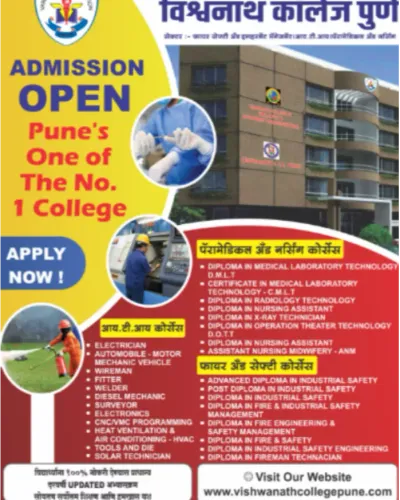
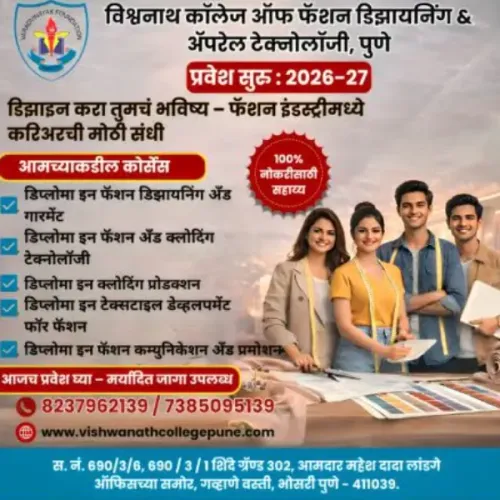
Students evaluating Vishwanath College in Pune can assess its hospitality education by looking at practical learning rather than relying solely on the course title.
Ask about the current syllabus, practical exercises, faculty guidance, course eligibility, duration, assessments, internship opportunities where applicable, and placement assistance.
It is also useful to understand what previous educational background is expected and what entry-level career paths the programme is intended to support.
A good provider should be able to explain these details clearly without relying on unrealistic employment promises.
Hotel reception and booking management can suit students who combine customer-service ability with organisation and attention to detail. Training that develops communication, reservation knowledge, computer confidence, hotel coordination, and professional behaviour can provide a practical starting point for pursuing front office opportunities in the hospitality sector.