
An Advanced Diploma in Industrial Safety is designed for individuals interested in workplace safety, hazard control and industrial risk management. As factories, construction sites, warehouses and engineering facilities become more structured about occupational safety, trained professionals are needed to understand hazards and support preventive systems.
For students and working professionals in Pune, understanding the scope of industrial safety education can help determine whether this field suits their career plans.
What Does Industrial Safety Involve?
Industrial safety focuses on preventing workplace incidents, injuries, fires and unsafe operating conditions.
Safety personnel may need to understand how people, machines, materials and processes interact. Their responsibilities can involve workplace inspections, hazard identification, documentation, emergency preparedness and communication of safety procedures.
The field therefore combines technical understanding with observation, communication and disciplined implementation.
What Does an Advanced Diploma Cover?
Course content varies by institution, but an Advanced Diploma in Industrial Safety may introduce learners to subjects such as
- Occupational health and safety
- Industrial hazards
- Accident prevention
- Fire safety
- Electrical safety
- Chemical safety
- Personal protective equipment
- Emergency response
- Safety management systems
- Risk assessment
- Workplace inspections
- Safety documentation
Students should check the current syllabus of a programme before admission rather than assuming every diploma covers identical topics.
Who Can Consider This Programme?
Industrial safety education can appeal to different learner groups.
Engineering and diploma students may consider it as an additional specialization. Working professionals may study safety to broaden their knowledge of workplace responsibilities. Individuals already employed in factories, construction, maintenance or operations may also find safety concepts relevant to their working environment.
Eligibility requirements can vary, so candidates should verify them directly with the institute offering the programme.
Why Practical Understanding Matters
Knowing the definition of a hazard is different from identifying one in a real workplace.
Effective safety education should encourage students to examine practical situations. For example, learners should be able to recognise unsafe electrical conditions, blocked emergency exits, inadequate machine guarding, poor material storage or inappropriate use of protective equipment.
Case studies, demonstrations and practical exercises can make safety principles easier to understand.
Risk Assessment Is an Important Skill
One of the central ideas in industrial safety is understanding risk.
A hazard is something capable of causing harm, while risk considers the likelihood and possible consequences of that harm.
Students may learn to
- Identify hazards.
- Determine who may be affected.
- Evaluate possible consequences.
- Examine existing controls.
- Recommend additional precautions.
- Document findings.
- Review controls periodically.
This structured thinking is useful across many industrial environments.
Pune Offers a Relevant Learning Context
Pune and neighbouring industrial belts in Maharashtra contain automotive facilities, engineering businesses, manufacturing units, warehouses, construction activities and supporting industries.
This environment makes industrial safety a relevant field of study for learners interested in industrial careers.
However, students should avoid assuming that completing one qualification automatically guarantees a particular job. Career outcomes depend on educational background, practical competence, communication ability, experience and employer requirements.
What Should You Check Before Admission?
Before joining a programme, review the syllabus carefully.
Ask about faculty experience, practical sessions, assessment methods, course duration, eligibility and certification. Students should also determine whether the programme addresses contemporary workplace safety practices rather than relying entirely on theoretical instruction.
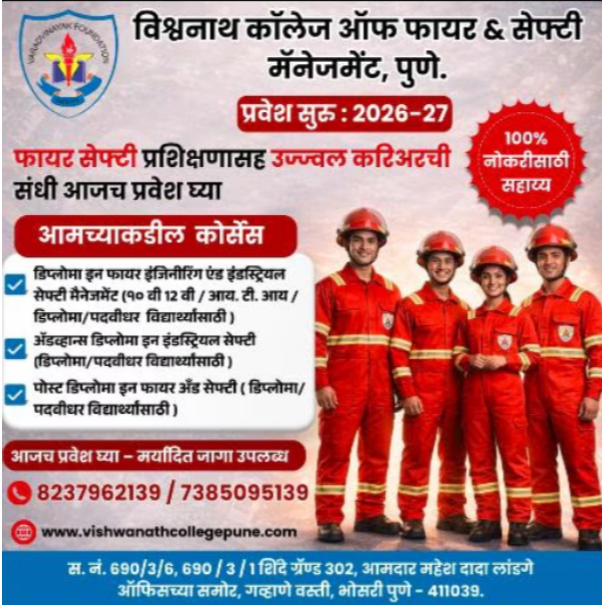
Vishwanath College in Pune provides career-oriented learning options that include areas relevant to industrial and technical education. Students considering safety studies can discuss programme requirements and understand how the course aligns with their existing qualifications.
An Advanced Diploma in Industrial Safety can provide structured exposure to workplace safety principles, but its real value comes from learning to observe hazards, analyse risks and apply preventive thinking responsibly.
For learners genuinely interested in safer industrial operations, that combination of knowledge and practical awareness provides a useful foundation for further career development.


