
Students interested in laboratory-based healthcare careers frequently search for DMLT Course Details after completing Class 12. DMLT generally refers to Diploma in Medical Laboratory Technology, a programme focused on the laboratory processes that support medical testing and diagnosis.
For students in Pune and elsewhere in Maharashtra, understanding what laboratory technology actually involves is important before choosing the course.
What Is DMLT?
Medical laboratories process different types of clinical samples and generate information that doctors may use alongside symptoms, examinations and other investigations.
A DMLT programme introduces students to the principles and procedures involved in laboratory work.
Depending on the curriculum, learners may study areas related to blood testing, microbiology, pathology, biochemistry and sample handling.
What Subjects May Be Covered?
Exact subjects vary according to the programme and awarding body. Typical areas may include
- Basic anatomy and physiology
- Clinical pathology
- Haematology
- Microbiology
- Biochemistry
- Laboratory techniques
- Sample collection and handling
- Laboratory equipment
- Infection-control practices
- Biomedical waste awareness
- Record maintenance
Students should request the current syllabus before enrolling because course structures can differ.
What Skills Does a Laboratory Student Need?
Laboratory technology requires more than academic knowledge.
Accuracy is extremely important because samples, measurements and records must be handled carefully. Students should develop disciplined working habits and learn to follow procedures consistently.
Useful qualities include attention to detail, patience, hygiene awareness, responsible documentation and the ability to work methodically.
Learners should also become comfortable with laboratory equipment and understand why proper handling procedures matter.
Why Practical Training Matters
Students researching DMLT Course Details should pay particular attention to practical exposure.
Laboratory work cannot be understood completely through textbooks. Practical learning helps students become familiar with equipment, sample processing, basic testing procedures and laboratory safety.
During an institute visit, ask how practical sessions are conducted and what laboratory facilities are available to students.
What Are the Career Environments?
Depending on qualification requirements and the policies of individual employers, trained laboratory personnel may find opportunities in environments such as
- Diagnostic laboratories
- Hospitals
- Clinics
- Pathology facilities
- Healthcare laboratories
- Sample collection operations
- Research-related laboratory settings
Actual job roles and eligibility requirements vary. Students should examine current employer expectations when planning their careers.
Is DMLT Suitable After Class 12?
Students from science backgrounds who are comfortable with biology, laboratory work and healthcare-related subjects may find medical laboratory technology worth exploring.
However, interest in healthcare alone is not enough. Laboratory work often requires concentration, precision and consistent adherence to procedures.
Students should consider whether they enjoy practical science and behind-the-scenes healthcare work before making a decision.
Questions to Ask Before Joining
Before taking admission, clarify
- What is the current eligibility requirement?
- How long is the programme?
- Which subjects are included?
- How much laboratory practice is provided?
- How are students assessed?
- What certification is awarded?
- Are practical demonstrations part of regular learning?
- What further education options may be available?
These questions provide a clearer picture than relying only on a course name.
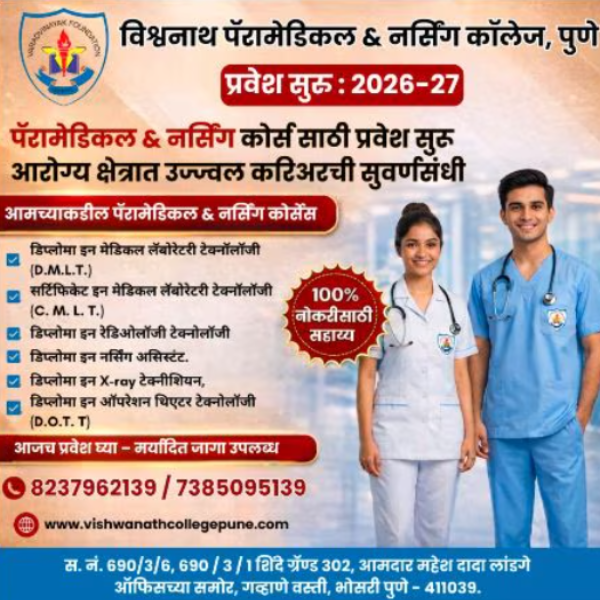
Students exploring healthcare-oriented vocational education in Pune can approach Vishwanath College to understand available programme structures, eligibility and learning arrangements. Course information should always be checked for the relevant academic session.
Understanding DMLT Course Details before admission helps students evaluate the programme realistically. The course can be suitable for learners interested in laboratory science, but students should select it because the actual work matches their interests and abilities rather than simply because healthcare is perceived as a growing sector.